Pawpaws: How to get a native fruit in grocery stores
Me
Overview
Reporting in progress.
What the heck is a pawpaw?
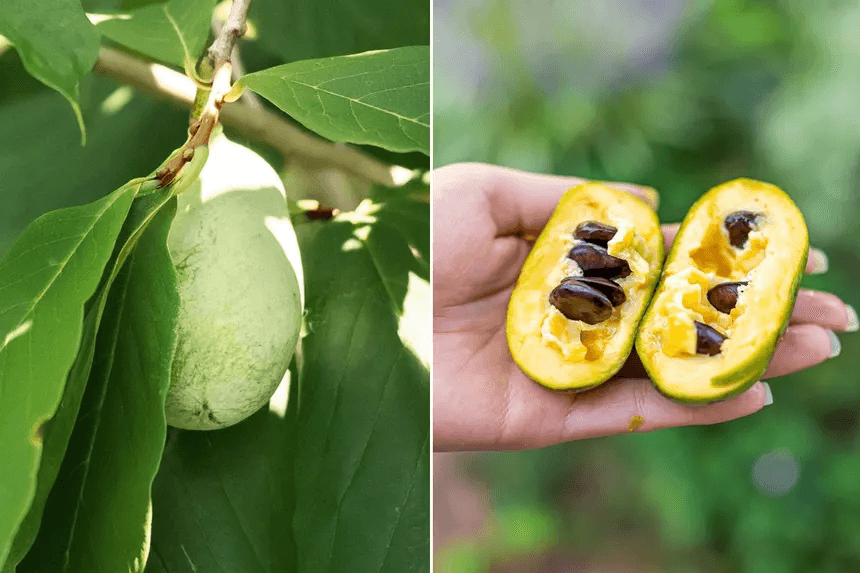
Answer: it's one of America's native fruits. Unlike our supermarket favorites such as apples, bananas, or oranges, pawpaws are from here. They originated here. They are indigenious to this land.
Pawpaws are found in the wild anywhere between northern Florida to the top of Ohio and into Southern Canada, and as far west as the eastern Nebraska.
Take a quick look around North Carolina and you'll find a cult-like following for this farfetched fruit. It's a fruit beloved by animals, foragers, enthusiasts, and growers.
They have an oblong shape similar to a potato or mango and their flavor is described to be tropical, like a mixture of said mango, banana, and pineapple with a texture that's smooth and creamy like custard.
Sounds wonderful, right? A tropical, custardy, native fruit.
Why isn't it in grocery stores? Or even at local farmers markets?
Growing pawpaws, as wonderful as they may sound, comes with many challenges. To name a few: the pawpaw tree has, what experts call, an inefficient fruit set, meaning the amount of fruit produced per tree isn't great at scale. The shelf-life of the fruit is also very short (only a couple days for ripeness). Pollunation isn't done by friendly bees and butterflies, it has to be done by flies and beetles. And then, there's post-harvest production and the infrastructure (or lack there of) to get it processed, distributed, and stored for consumers at market.
One team at NC State University is trying to solve these problems. Led by Dr. Thomas Ranney, the head researcher at NC State University's Extension Center in Western North Carolina, they are seeking innovations with growing varieties of cultivars and tackling challenges with the post-harvest process.
Can pawpaws make it into grocery stores around North Carolina? What will it take? And, what is the economic potential for this native fruit? If it does make it, after cultivation and innovation, will it still be the same?
Techs
rode mics

zoom h4n pro

adobe audition

rss feed